CPR for Choking Adults: What to Do When Someone Becomes Unresponsive
When an adult is choking, the right response depends on whether the person is still responsive. A person who is awake and severely choking may need choking first aid. A person who becomes unresponsive needs CPR right away.
The American Heart Association’s updated CPR and emergency cardiovascular care guidance gives new attention to choking response. For a conscious adult or child with severe choking, the updated guidance recommends alternating sets of five back blows and five abdominal thrusts until the object is expelled or the person becomes unresponsive. Once the person becomes unresponsive, the response changes to CPR, airway checks, calling 911, and using an AED as soon as one is available.
This guide explains how CPR differs for an unresponsive adult choking victim, what to do before the person becomes unresponsive, and why hands-on CPR, AED, and First Aid training can help people respond more confidently in a real emergency.
What Should You Do If the Choking Adult Is Still Responsive?
If an adult appears to be choking, ask, “Are you choking?”
If the person can cough forcefully, speak, or breathe, encourage them to keep coughing. A strong cough may clear the airway without additional intervention.
If the person cannot breathe, speak, cry, or cough effectively, treat it as severe choking. Call 911 or tell someone nearby to call. Current AHA guidance recommends alternating five back blows with five abdominal thrusts for conscious adults and children with severe choking.
Continue until the object comes out, the person can breathe, or the person becomes unresponsive.
What Changes When the Choking Person Becomes Unresponsive?
Once the person becomes unresponsive, choking first aid changes to CPR.
Do not continue standing abdominal thrusts after the person loses consciousness. Carefully lower the person to the floor or another firm, flat surface. If 911 has not already been called, call immediately. Send someone to get an AED if one is available.
CPR for an unresponsive choking adult uses the same adult CPR cycle of compressions and breaths, but with one important choking-specific difference: each time you open the airway to give breaths, look for a visible object in the mouth.
Remove the object only if you can clearly see it and remove it safely.
Do not perform a blind finger sweep. Searching the mouth with your fingers when you cannot see the obstruction can push the object deeper into the airway
Step 1: Call 911 and Send Someone for an AED
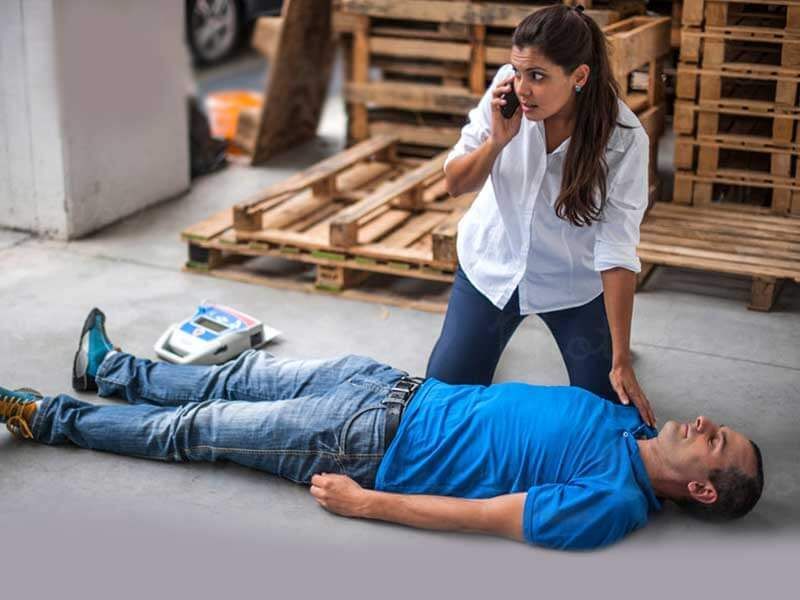
If the person becomes unresponsive, call 911 immediately. If others are nearby, give clear instructions.
Say, “You, call 911.”
Then tell another person, “You, get the AED.”
If you are alone and have a mobile phone, call 911 on speaker mode so you can begin CPR while following the dispatcher’s instructions. If a dispatcher gives instructions, follow them.
Step 2: Place the Person on a Firm, Flat Surface
Carefully lower the person onto their back. CPR should be performed on a firm, flat surface so chest compressions can be effective.
Kneel beside the person’s chest. Make sure the airway is accessible. If an AED arrives, expose the chest enough to place the pads correctly.
Step 3: Start Chest Compressions

Begin CPR with chest compressions.
Place the heel of one hand in the center of the chest on the lower half of the breastbone. Place your other hand on top. Keep your arms straight and position your shoulders over your hands.
Push hard and fast. For an adult, compress at least 2 inches deep at a rate of 100 to 120 compressions per minute. Let the chest fully recoil between compressions.
Perform 30 compressions.
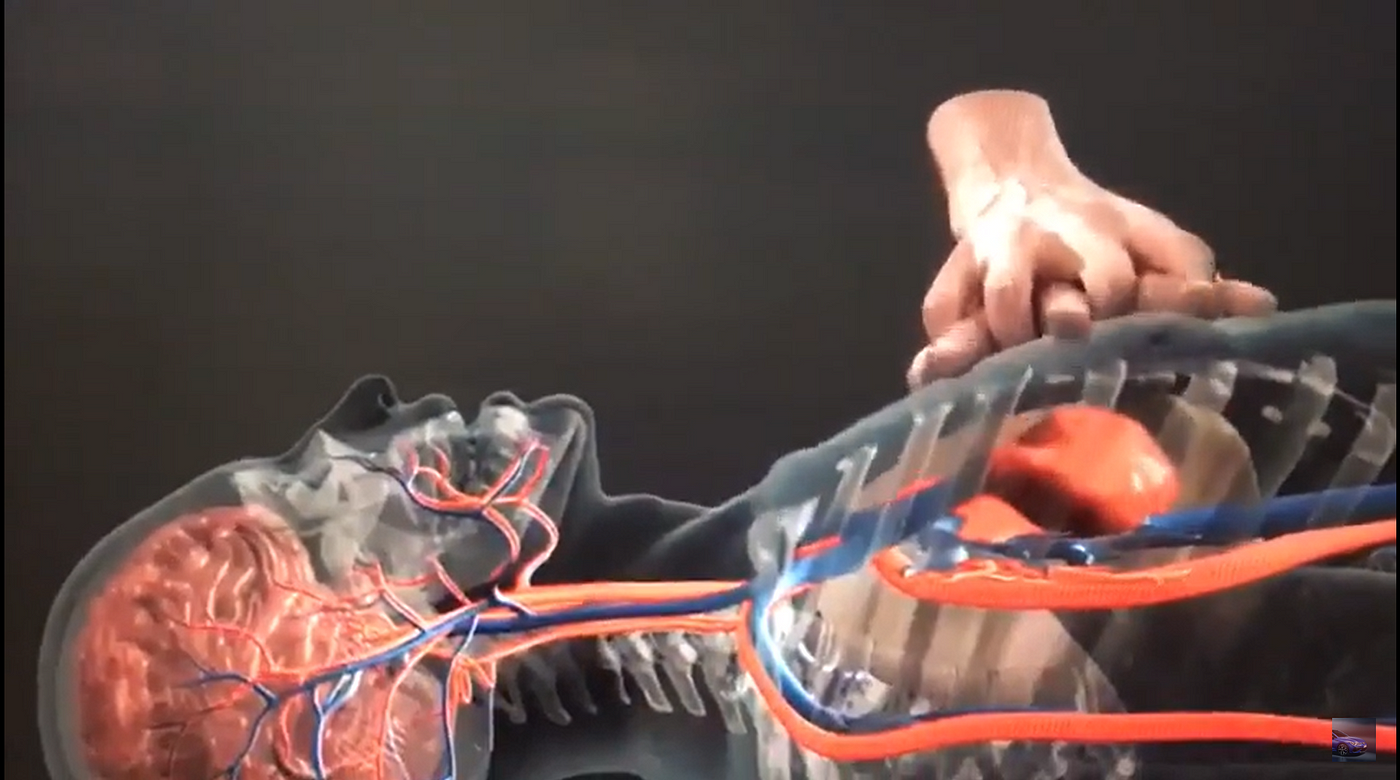
Chest compressions help circulate blood. In a choking emergency, compressions may also create pressure that can help move the obstruction.
Step 4: Open the Airway and Look for a Visible Object

After 30 compressions, open the airway using the head-tilt/chin-lift technique unless you suspect a traumatic injury.
Look inside the mouth. If you see an object and can remove it safely, remove it carefully.
If you do not see an object, do not search blindly with your fingers.
This is one of the key differences between standard CPR and CPR for an unresponsive choking victim. You are still performing CPR, but you are also checking for a visible airway obstruction before giving rescue breaths.
Step 5: Give 2 Rescue Breaths If Trained and Able
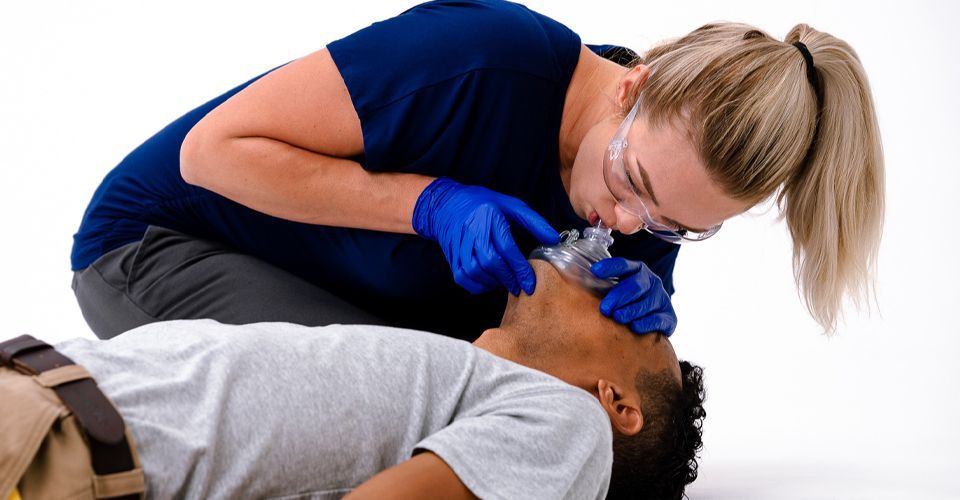
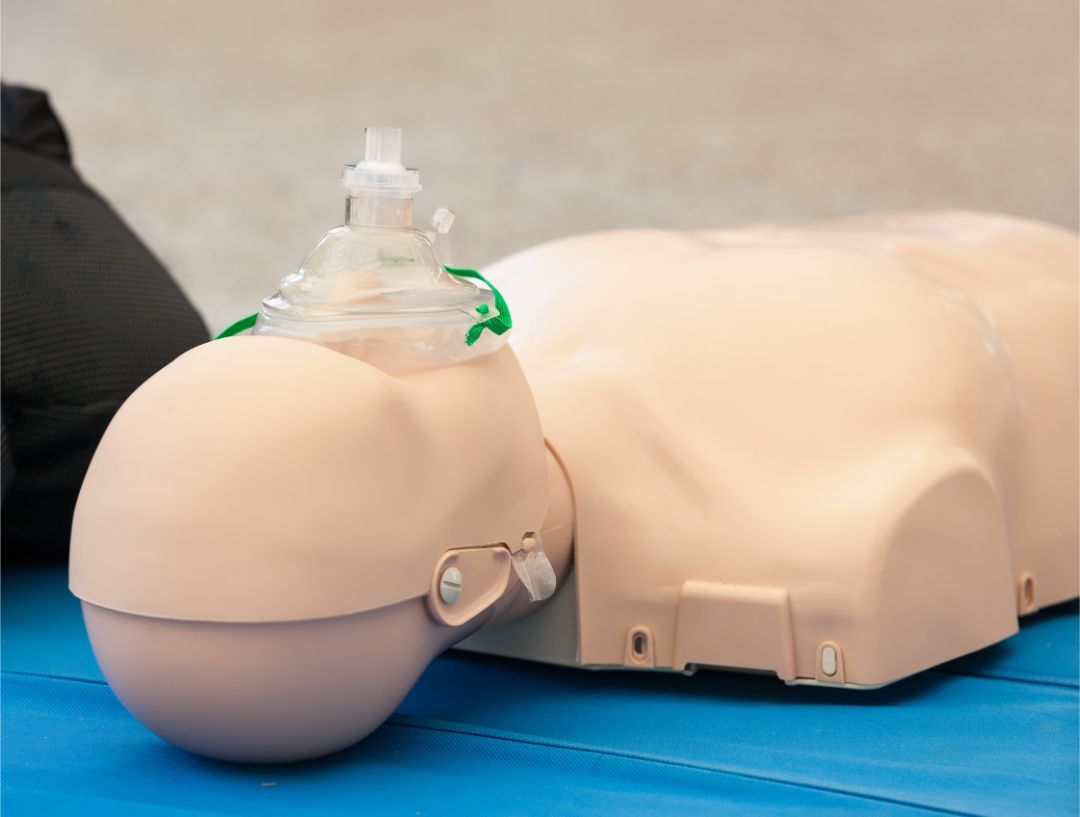
After checking the airway, give 2 rescue breaths if you are trained and able to do so.
Each breath should last about 1 second. Watch for the chest to rise.
If the chest does not rise, reopen the airway and try again. If breaths still do not go in, return to chest compressions.
Do not spend too much time trying to force breaths. If the airway remains blocked, continue compressions.
Use a CPR mask or pocket mask if one is available.
Step 6: Continue CPR Cycles
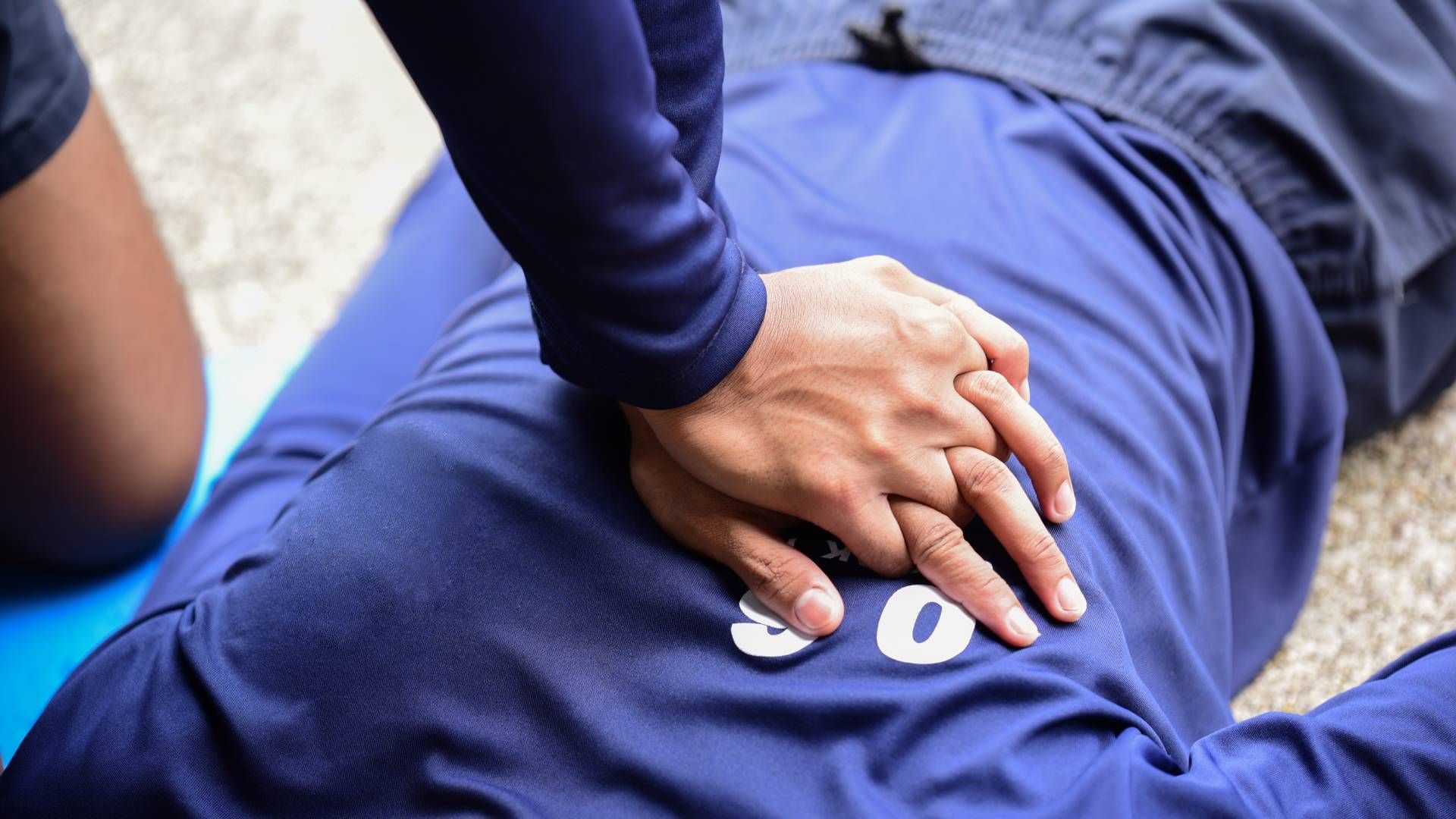
Continue cycles of 30 compressions and 2 breaths.
Each time you open the airway to give breaths, look for a visible object. Remove it only if you can clearly see it and remove it safely.
Continue CPR until the person begins breathing normally, EMS arrives and takes over, an AED tells you to pause, you are too exhausted to continue, or the scene becomes unsafe.
Step 7: Use an AED as Soon as It Arrives
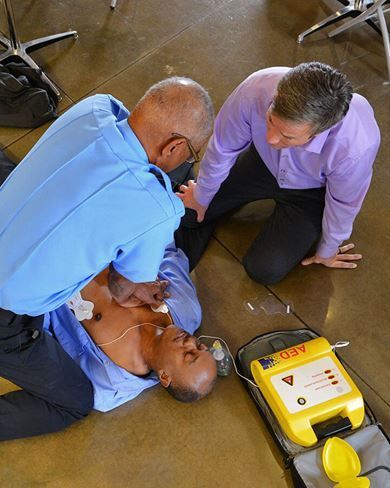
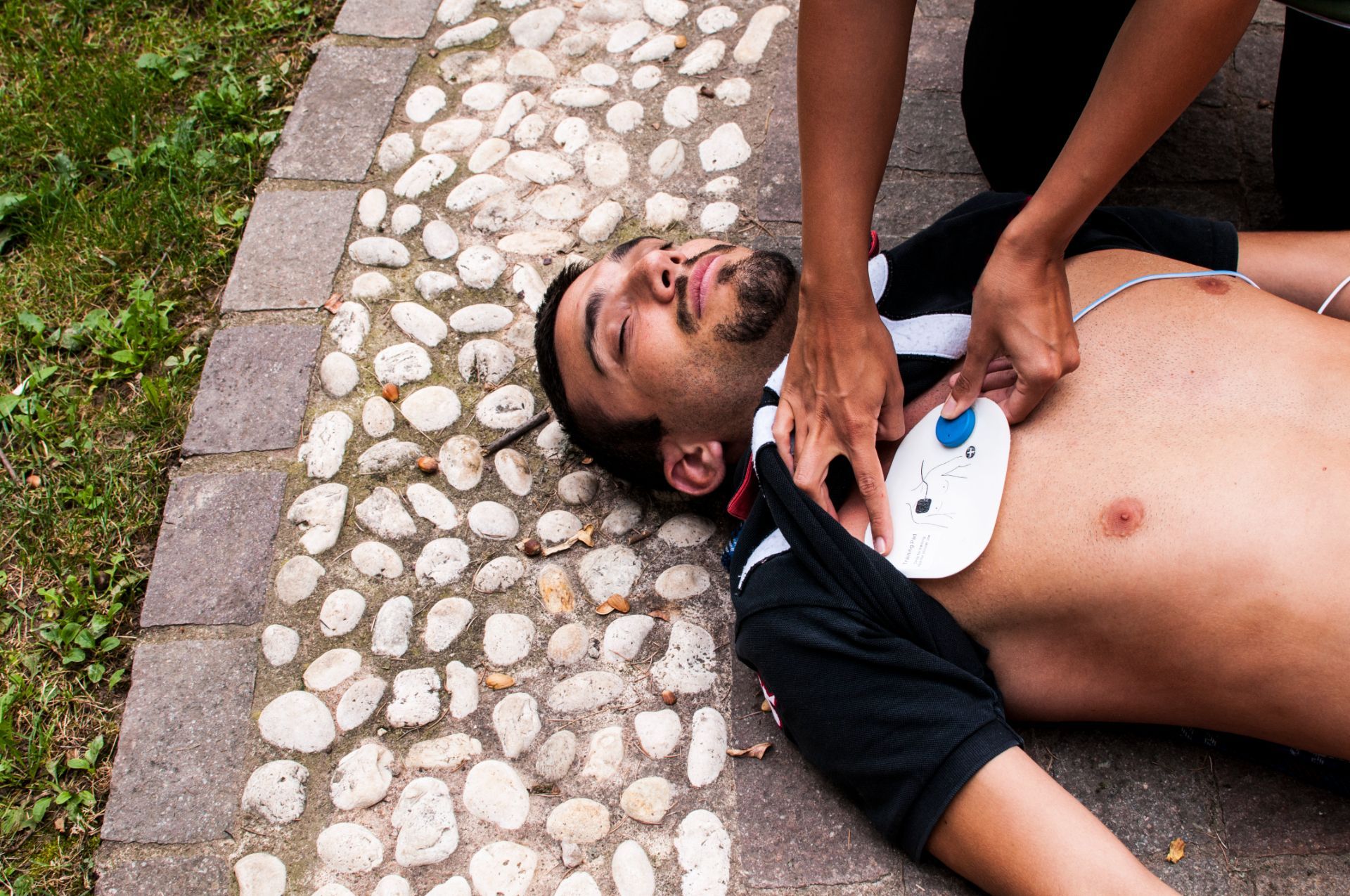
If an AED is available, turn it on and follow the voice prompts.
Attach the pads to the person’s bare chest as shown on the AED diagrams. Let the AED analyze the heart rhythm. Deliver a shock only if the AED tells you to do so.
Resume CPR immediately when the AED instructs you to continue.
Even when choking caused the emergency, an AED may still be needed if the person’s heart rhythm becomes dangerous
What Not to Do During an Unresponsive Choking Emergency
- Do not continue abdominal thrusts once the person is unresponsive.
- Do not perform blind finger sweeps.
- Do not delay CPR while repeatedly checking the mouth.
- Do not give excessive breaths.
- Do not wait for EMS before starting CPR if the person is unresponsive and not breathing normally.
Why Choking Can Lead to a Heart Emergency
Choking blocks airflow. If oxygen cannot reach the lungs, the brain, heart, and body are deprived of oxygen. If the obstruction is not cleared and the person cannot breathe normally, the heart may eventually stop functioning effectively.
That is why choking first aid and CPR are closely connected. Choking first aid is used while the person is responsive. CPR is used when the person becomes unresponsive and is not breathing normally.
Why Updated CPR and First Aid Training Matters
The AHA’s updated guidance reinforces how quickly an emergency can change. A person may go from coughing and responsive to unresponsive in moments.
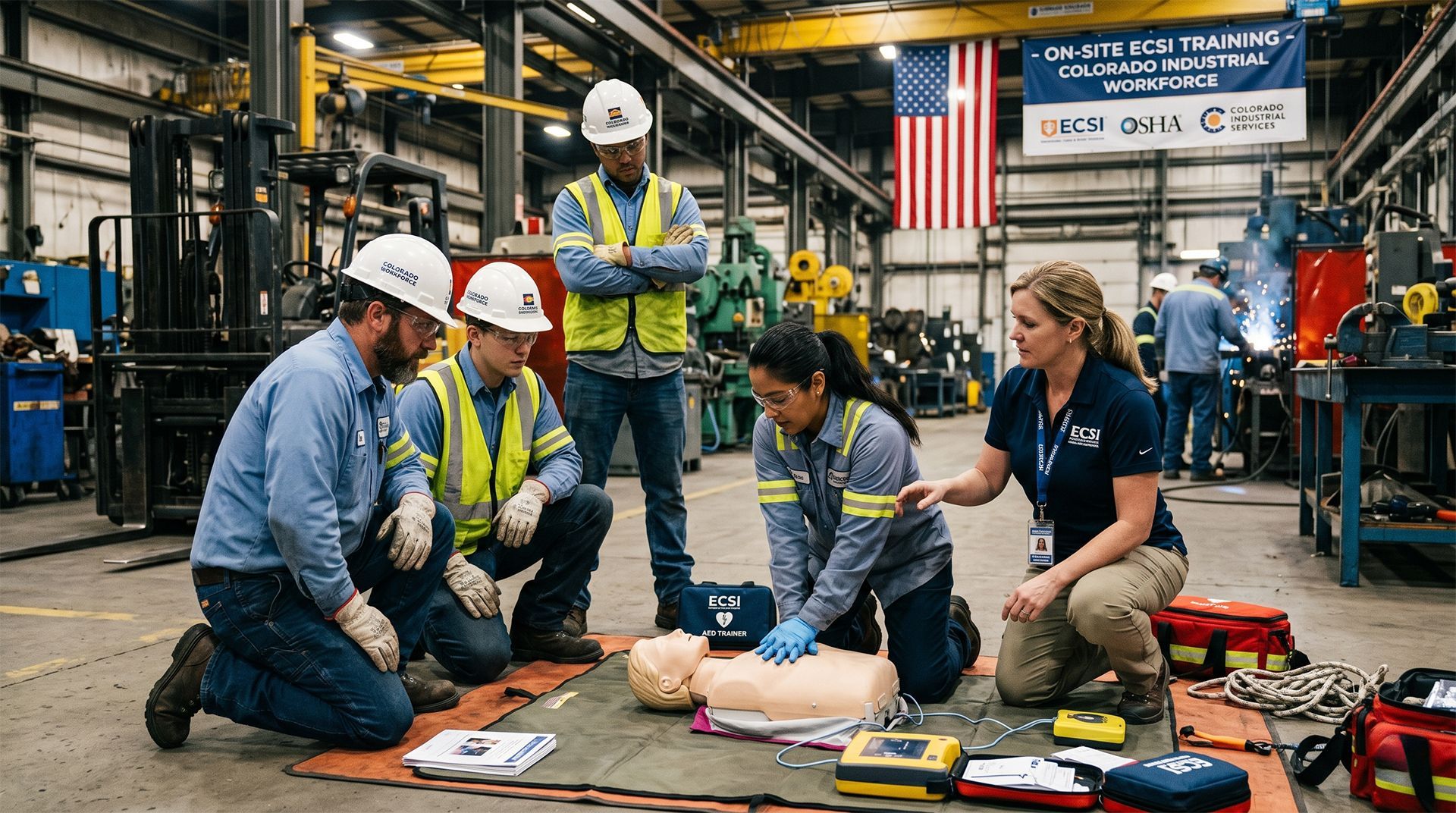
Hands-on CPR, AED, and First Aid training gives students the opportunity to practice the correct sequence with instructor feedback. That includes back blows, abdominal thrusts, chest compressions, rescue breaths, AED use, and airway checks.
Training also helps students understand what not to do, including avoiding blind finger sweeps, avoiding delays in CPR, and following dispatcher instructions during an emergency.
CPR, AED, and First Aid Training in Denver and Colorado
Rapid Rescue CPR & Safety Training Solutions provides CPR, AED, First Aid, BLS, and emergency response training for individuals, workplaces, healthcare teams, schools, construction crews, and community organizations across the Denver area and Colorado.
Our classes are designed to help students understand current CPR and choking-response practices through hands-on instruction and realistic emergency scenarios. Whether you need CPR certification in Denver, BLS renewal, workplace First Aid training, or
on-site group CPR training, our instructors can help your team build practical emergency response skills.
Legal and Safety Note
This article is for general education only. It is not a substitute for hands-on CPR training, professional medical advice, diagnosis, treatment, emergency medical care, or the instructions of a 911 dispatcher.
Emergency response laws, including Good Samaritan protections, vary by state. Follow your training, follow dispatcher instructions, and call 911 during a medical emergency.
Frequently Asked Questions
What is the first thing to do if an adult is choking?
Ask if the person is choking. If they can cough, speak, or breathe, encourage coughing. If they cannot breathe, speak, cry, or cough effectively, call 911 and begin choking first aid.
What does current AHA guidance recommend for a responsive choking adult?
Current AHA guidance recommends alternating five back blows and five abdominal thrusts for a conscious adult or child with severe choking.
What should I do if a choking adult becomes unresponsive?
Lower the person to the ground, call 911, send someone for an AED, and begin CPR. Check the mouth for a visible object before giving rescue breaths, but do not perform blind finger sweeps.
Is CPR different for an unresponsive choking victim?
The CPR cycle is still 30 compressions and 2 breaths, but the rescuer also checks for a visible airway obstruction before giving breaths.
Should I use an AED if the emergency started with choking?
Yes. Use an AED as soon as one is available. Turn it on, follow the prompts, and resume CPR when instructed.
Can I be sued for helping during a choking emergency?
Good Samaritan laws vary by state. In general, these laws are designed to provide some protection for people who help in good faith during emergencies. This article is not legal advice. Follow your training, call 911, and follow dispatcher instructions.