On-Site ECSI Training for Colorado's Industrial Workforce
A Guide for Safety Officers, HR Managers & Operations Leaders in Construction, Manufacturing, and Oil & Gas
If Safety Training Is on Your Plate, You're in the Right Place
Whether you're a safety officer at a Front Range construction company working through an OSHA compliance checklist, an HR manager at a Northern Colorado manufacturing facility trying to get your workforce certified before a contract deadline, or an operations leader in Colorado's oil and gas sector who knows your crew faces risks that standard office-oriented training simply doesn't address — this article is written for you. Rapid Rescue CPR & Safety Training Solutions is an authorized ECSI (Emergency Care & Safety Institute) Education Center, and they bring certified, hands-on emergency care training directly to your job site, your facility floor, or your operations yard — wherever your people are.
What makes ECSI the right fit for high-hazard industries isn't just the credentialing — it's the philosophy. ECSI training is built around preparing real people working in real environments to respond effectively and confidently to the kinds of emergencies that are statistically most likely in their specific industry. For a construction crew working at elevation, a manufacturing team operating heavy equipment, or an oil and gas crew working in a remote location miles from the nearest trauma center, that specificity matters enormously. Rapid Rescue's instructors understand that distinction, and they tailor every on-site session to the real-world context of the organization they're serving.
Getting started is simple —
reach out through the inquiry form at rapidrescuetraining.com or email
info@rapidrescuetraining.com. The team will take it from there.
Why On-Site Delivery Is the Only Practical Option for Industrial Teams
For organizations operating in construction, manufacturing, and oil and gas, sending teams to an off-site training facility isn't just inconvenient — it's often operationally impossible. You can't pull a full construction crew off a job site during a critical phase of a project. You can't ask a manufacturing plant to pause a production line while employees drive across town for a certification class. And for oil and gas operations in remote locations across Colorado's vast terrain, 'nearby training center' simply isn't a realistic concept. On-site delivery isn't a convenience feature for these industries — it's the only model that works.
Rapid Rescue comes to your location fully equipped, bringing all necessary training materials and equipment. Your team trains together in their actual work environment, with an instructor who understands the hazards and scenarios relevant to your industry. That contextual relevance is what separates training that genuinely prepares your people from training that technically satisfies a compliance box. When Rapid Rescue leaves your site, your team walks away with real skills, real confidence, and real certifications — not just a card to file in an HR folder..
The Numbers That Make This More Than a Compliance Task
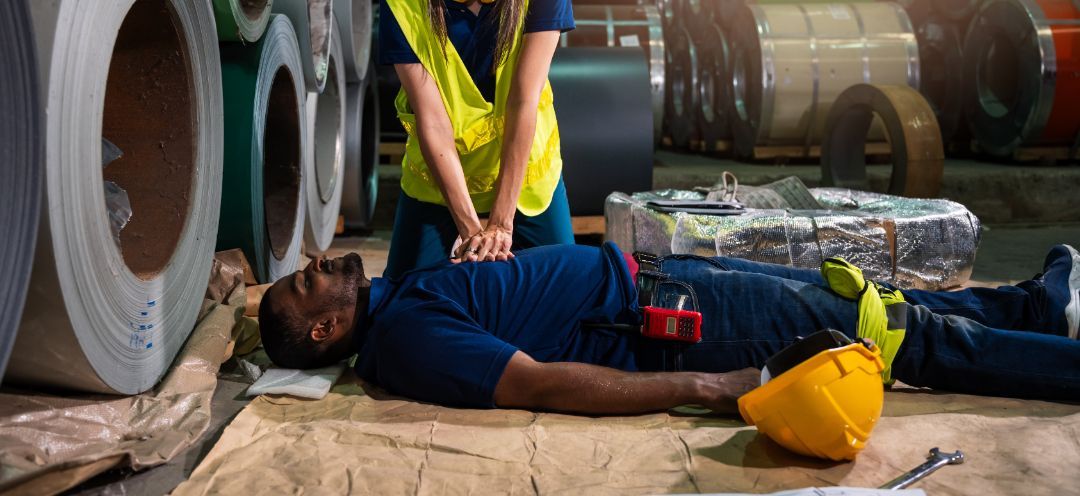
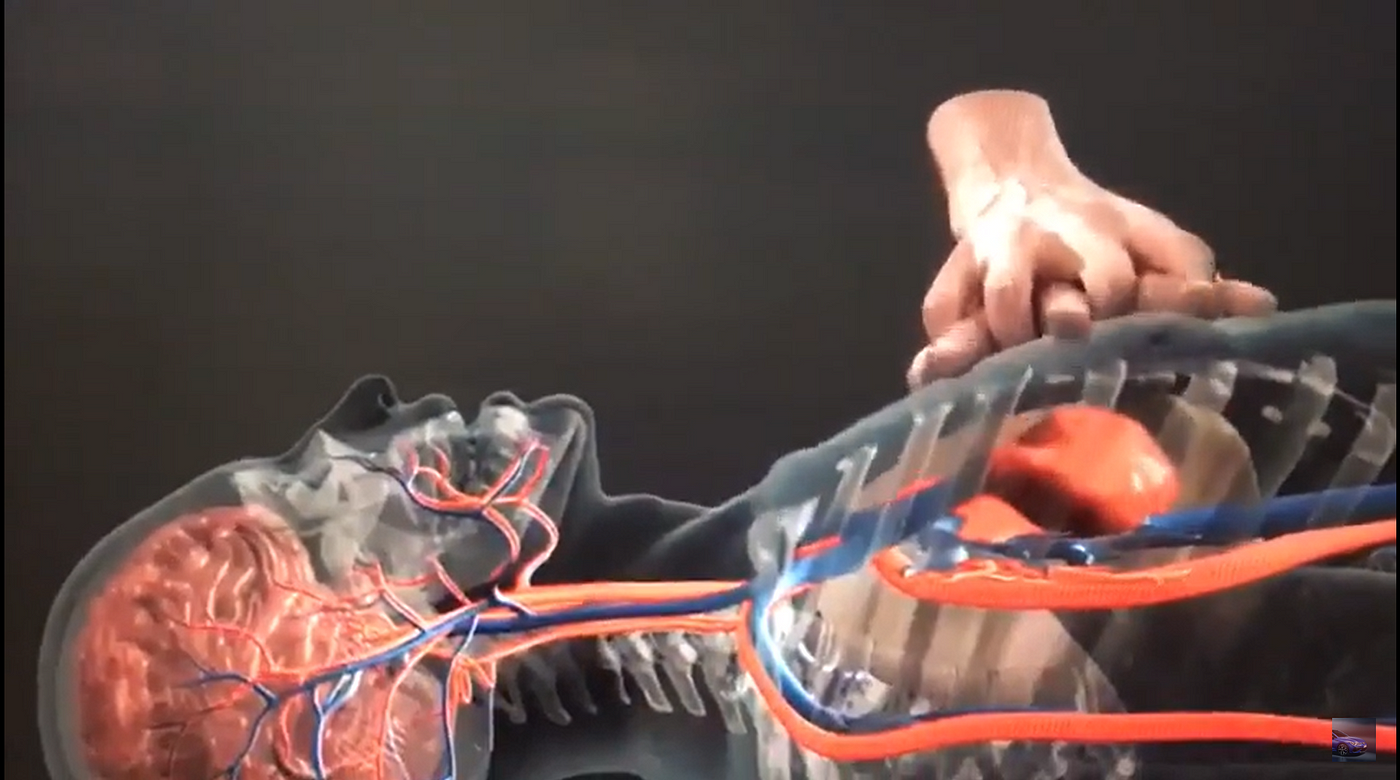
The American Heart Association estimates that sudden cardiac arrest claims between 250,000 and 400,000 lives in the United States every year, with OSHA data showing that approximately 10,000 of those cardiac arrests occur in the workplace. In high-hazard industries — where EMS response times may be significantly longer than in urban settings — the minutes between an incident and EMS arrival represent a critical window. A trained crew member who responds immediately, stabilizes the patient, and packages them correctly gives EMS the best possible situation to work with when they arrive. That is the role ECSI training prepares people to fill — not replacing EMS, but making sure the patient is ready for the care EMS is coming to provide.
It is also reassuring to know that Colorado's Good Samaritan Law protects those who render emergency first aid from liability for injuries they may cause, applying to both trained healthcare professionals and ordinary citizens acting in good faith without expectation of payment. For safety officers and HR managers who field questions from employees worried about legal consequences of stepping in during an emergency, this is an important piece of context to communicate — and one more reason that proper, credentialed training through an authorized provider like Rapid Rescue gives your workforce the confidence to act when it matters most.
What Is ECSI — and Why Does It Matter for High-Hazard Industries?
The Emergency Care & Safety Institute (ECSI) is a nationally recognized training organization whose programs are specifically designed to prepare people — not just healthcare professionals — to respond effectively in a wide range of emergency situations. ECSI's course content is built from the ground up for practicality: real skills, taught in hands-on environments, focused on the kinds of emergencies most likely to occur in the settings where your team actually works.
The medical authority behind ECSI is significant. ECSI programs are developed in association with the American Academy of Orthopaedic Surgeons (AAOS) and the American College of Emergency Physicians (ACEP) — two of the most renowned medical organizations in the world. These bodies provide medical direction and oversight for all ECSI program content, ensuring that what is being taught reflects current, evidence-based best practice. ECSI programs are consistent with ILCOR (International Liaison Committee on Resuscitation) recommendations and meet AHA guidelines. For safety officers and HR managers who need to demonstrate the credibility of their training program to leadership, auditors, or regulatory inspectors, that foundation carries real weight..
Rapid Rescue: An Authorized ECSI Education Center
Not every provider that delivers first aid training is an authorized ECSI Education Center. Rapid Rescue CPR & Safety Training Solutions is. As an authorized ECSI Education Center, Rapid Rescue operates under a formal agreement with ECSI, delivers training in strict accordance with ECSI's instructor resources and course methods, and is authorized to issue official ECSI course completion cards to students upon successful completion of required in-person skills assessments. This is the credential that employers, licensing bodies, and OSHA compliance inspectors recognize and accept — not a third-party certificate of attendance, but an official ECSI course completion card issued by an authorized provider.
This matters practically for the people organizing training. When you book with Rapid Rescue, you know that the certifications your employees receive will stand up — to your company's internal safety audits, to client contractor qualification systems, to OSHA inspections, and to the licensing requirements of any regulatory body that recognizes ECSI credentials. You won't be explaining to an auditor why your team's certifications came from an unauthorized source. Rapid Rescue's authorized status is your assurance that everything is done correctly, from the curriculum delivery through to the credentials issued..
ECSI Certification and OSHA Compliance
ECSI CPR and first aid training is 100% OSHA compliant. For Colorado's industrial employers, understanding the specific OSHA standards that apply to your industry is essential — and the requirements vary by sector.
For construction employers, OSHA standard 29 CFR 1926.50 requires that in the absence of an infirmary, clinic, or hospital reasonably accessible in terms of time and distance from the worksite, a person with a valid certificate in first aid training from an equivalent training program that can be verified by documentary evidence must be available at the worksite to render first aid. For serious injury scenarios — falls, suffocation, electrocution, or amputation — OSHA has interpreted this to require emergency medical services availability within three to four minutes. In the absence of that proximity, a trained first aid provider on site is required. ECSI certification through Rapid Rescue satisfies this requirement.
For general industry employers — including manufacturing and oil and gas — OSHA standard 29 CFR 1910.151 requires that in the absence of an infirmary, clinic, or hospital in near proximity to the workplace, a person or persons shall be adequately trained to render first aid. Colorado falls under federal OSHA jurisdiction, as the state has no separate state-plan OSHA program. Specific requirements vary by industry, workplace size, and the nature of hazards present.
⚠️ Important Notice
The information in this article is provided for general educational purposes only and does not constitute legal, regulatory, or professional safety advice. OSHA requirements vary significantly by industry, workplace type, and specific hazard conditions. Colorado employers should consult a qualified occupational safety professional, legal counsel, or contact OSHA directly at osha.gov to determine the specific training, documentation, and compliance requirements applicable to their organization.
ECSI Courses Available Through Rapid Rescue — On-Site at Your Location
Every course is delivered in person at your location by Rapid Rescue's certified, experienced instructors, with all required training equipment and materials provided. The following courses are available for on-site delivery to industrial employers across Denver, the Front Range, and Northern Colorado.
| ECSI Course | Best Suited For |
|---|---|
| Adult, Child & Infant CPR with AED | All industrial employees — foundational certification |
| Basic First Aid | All industrial employees — complements CPR/AED |
| CPR & First Aid Combo | Teams needing combined certification in one session |
| Advanced First Aid | Designated first responders, safety leads, supervisors |
| Wilderness First Aid | Remote site operations, pipeline, backcountry crews |
Do not see a specific course your organization requires? Rapid Rescue is happy to discuss custom course packages built around your organization's specific safety goals, regulatory requirements, and operational context. Reach out via the inquiry form or email to start that conversation.
List of Services
-
CPR, AED, and First Aid — The FoundationList Item 1
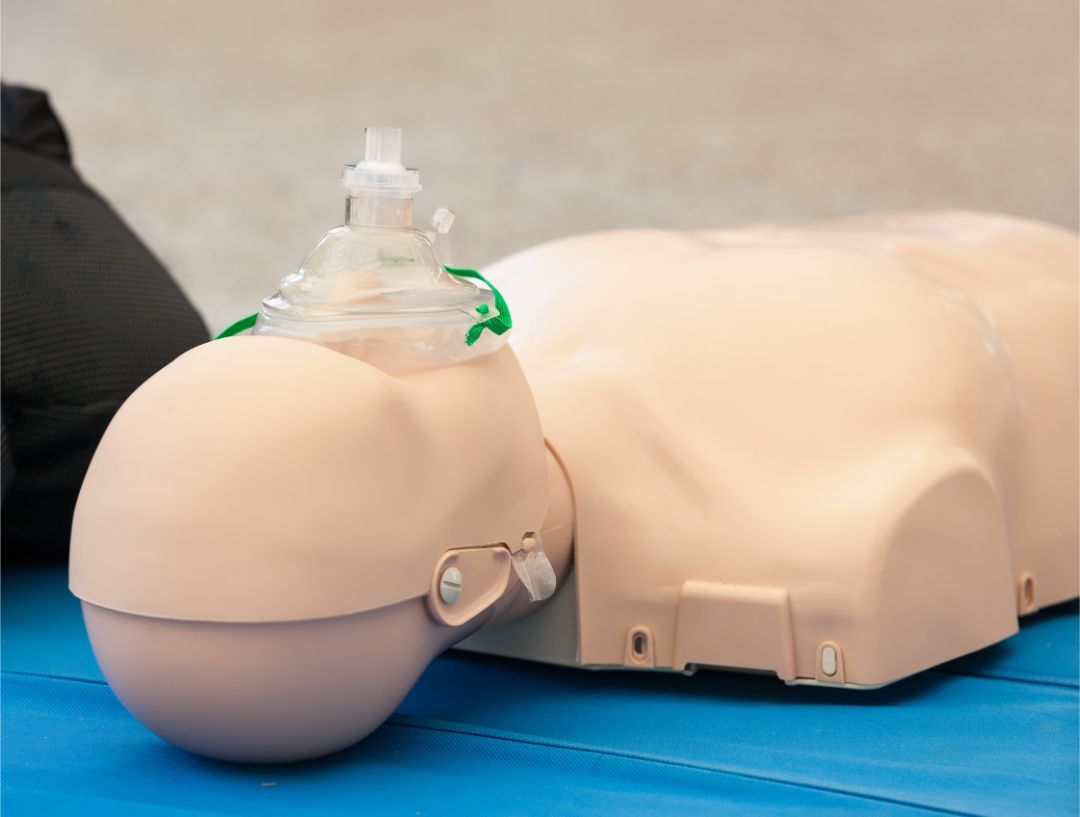
Adult, Child, and Infant CPR with AED, Basic First Aid, and combined CPR and First Aid courses form the training foundation that virtually every industrial employer in Colorado needs — and that OSHA compliance frameworks point toward. These courses cover recognition of cardiac arrest and other life-threatening emergencies, high-quality chest compressions, rescue breathing, correct AED operation, and first aid for the most common and highest-priority injuries. They are appropriate for all employees regardless of role, from front-line workers to supervisors and administrative staff, and are the starting point for building a workplace-wide culture of emergency preparedness.
Both CPR and first aid certifications issued through Rapid Rescue as an authorized ECSI Education Center are valid for two years from the date of successful course completion, at which point renewal training is required. Building renewal scheduling into your safety calendar proactively — rather than scrambling when certifications lapse before an audit or inspection — is one of the simplest ways to maintain continuous compliance. Rapid Rescue is happy to help you map out a renewal schedule when you book your first session.
-
Advanced First Aid — For Designated Workplace RespondersList Item 2
For organizations that designate specific employees as on-site first aid responders — a common and OSHA-recommended practice, particularly in high-hazard environments — Advanced First Aid through ECSI provides a meaningfully deeper level of preparedness than foundational first aid alone. This course equips designated responders with the skills to assess and manage a wider range of injuries and medical emergencies, providing more comprehensive care while waiting for emergency medical services to arrive. For construction site safety leads, manufacturing floor supervisors with first responder designations, and oil and gas operations that may be located significant distances from hospital-level care, Advanced First Aid is the course that bridges the gap between basic preparedness and genuine emergency management capability.
-
Wilderness First Aid — For Remote OperationsList Item 3
Colorado's oil and gas sector and certain construction and infrastructure projects frequently place crews in locations that are, by any practical definition, remote. Pipeline work in the mountains, drilling operations on the Eastern Plains, infrastructure projects in rural Colorado — these environments share a common challenge: if something goes wrong, professional emergency medical services may be twenty, thirty, or more minutes away. Wilderness First Aid (WFA) is specifically designed for exactly this scenario. It covers patient assessment and management in remote and austere environments, improvised treatment techniques for situations where standard medical supplies may not be available, evacuation decision-making, and extended patient care protocols for the period between an incident and professional medical care arriving. For any Colorado industrial operation where 'how long until EMS arrives' is a question with a long answer, Wilderness First Aid is the course that answers it.
Industry-Specific Training: Construction, Manufacturing & Oil and Gas
While the core ECSI curriculum provides an excellent foundation for any industrial employer, the specific emergency risks, regulatory frameworks, and operational contexts of construction, manufacturing, and oil and gas are distinct enough to warrant dedicated attention. Rapid Rescue's instructors are experienced in adapting ECSI content to the realities of each of these industries — and the industry-specific blogs in this series go deeper into exactly what that means for your sector.
List of Services
-
ConstructionList Item 1
Colorado's construction industry operates under OSHA's 29 CFR 1926 standard — the Safety and Health Regulations for Construction — which includes specific requirements for first aid and medical services under 29 CFR 1926.50. Construction sites present a distinct set of emergency risks: falls from elevation, struck-by incidents involving heavy equipment, electrocution, and traumatic injuries requiring immediate response. On a construction site in a semi-rural Front Range location, EMS response times that would be acceptable in a Denver office environment may be wholly inadequate. ECSI training through Rapid Rescue ensures that construction employers have certified, capable first aid providers on site who are ready to respond to the specific emergencies most likely in their work environment. The dedicated blog in this series covers what construction employers need to know about ECSI training in detail.
-
ManufacturingList Item 2
Manufacturing facilities in Colorado — from food processing plants and metal fabrication shops to aerospace component manufacturers and chemical production facilities — operate under OSHA's general industry standard 29 CFR 1910.151, and face a wide range of machinery-related, chemical, and ergonomic injury risks that require both foundational first aid preparedness and, in many facilities, designated advanced responders. The size and layout of manufacturing facilities also creates a practical challenge: an emergency in a large plant can occur far from any entrance, making rapid response by external emergency services difficult even when the facility is located in an urban area. ECSI training through Rapid Rescue ensures that manufacturing employers have trained responders distributed across their workforce and familiar with the specific layout and hazards of their facility. The dedicated blog in this series covers what manufacturing employers need to know.
-
Oil and GasList Item 3
Colorado's oil and gas sector operates across a vast and varied geographic area — from the Weld County drilling fields to the Western Slope's Piceance Basin and beyond — and often in conditions that combine physical hazard, remoteness, and variable weather in ways that make on-site emergency preparedness not just a compliance requirement but a genuine operational necessity. First aid, CPR, and AED certifications are widely recognized as essential credentials for oil and gas workers, alongside industry-specific safety certifications. ECSI's Wilderness First Aid course is particularly relevant for remote site operations, where the gap between an incident and EMS arrival may be measured not in minutes but in tens of minutes or more. The dedicated blog in this series covers what oil and gas employers need to know about ECSI training for their specific operational environment.
What Your Team Will Be Able to Do After ECSI Training
The goal of every ECSI session Rapid Rescue delivers is not just to issue certifications — it is to ensure that every person who walked into training feeling uncertain walks out genuinely capable and confident. ECSI's philosophy centers on preparing individuals to bridge the gap between when an emergency occurs and when advanced medical care arrives — to stabilize, manage, and prepare a patient for the next level of care, competently and calmly. After completing ECSI training with Rapid Rescue, your team will be equipped to:
- Quickly and safely assess an emergency scene and ensure responder safety
- Recognize life-threatening conditions requiring immediate action
- Perform high-quality CPR on adults, children, and infants (course-dependent)
- Operate an AED correctly and without hesitation
- Provide appropriate first aid for injuries common to their industry and work environment
- Stabilize a patient and prepare them for handoff to incoming emergency medical services
- Communicate clearly and effectively with emergency dispatchers and first responders
- Make sound decisions about when and how to move or evacuate a patient (WFA)
Why Choose Rapid Rescue as Your ECSI Training Partner?
There are a number of providers who deliver first aid training in Colorado. What makes Rapid Rescue the right choice for industrial employers specifically is the combination of their authorized Education Center status, the quality and real-world experience of their instructors, their genuine commitment to making the training relevant and practical, and their understanding that for construction, manufacturing, and oil and gas organizations, training is not an abstract compliance exercise — it is a direct investment in the safety of real people doing real work in genuinely hazardous environments.
Rapid Rescue's instructors are hand-picked not just for their knowledge and credentials, but for their energy, enthusiasm, and ability to connect with working adults in industrial settings. Most are seasoned healthcare providers with years of hands-on experience, and they understand how to deliver content that resonates with the people in the room — not just with the people who wrote the curriculum. When your crew sits down for an ECSI session delivered by Rapid Rescue, they will be engaged, they will practice real skills on real equipment, and they will leave feeling genuinely prepared rather than just technically certified.
Flexible Scheduling That Works Around Industrial Operations
Rapid Rescue holds all on-site classes at your location and at your convenience, including Saturday mornings — a particularly valuable option for industrial employers who cannot pull teams off an active job site or production floor during peak weekday operating hours. For organizations with multiple crews, shifts, or departments requiring certification, Rapid Rescue can also schedule back-to-back sessions at the same location in a single day, covering your entire workforce in one efficient visit rather than across multiple bookings over weeks. The minimum group size is just six participants, and pricing scales per person rather than per course — meaning you can cover as much curriculum as your team needs without adding complexity to the cost structure.
Certifications, Records, and Renewal — All Managed Simply
As an authorized ECSI Education Center, Rapid Rescue issues official ECSI course completion cards upon successful completion of each in-person course — typically valid for two years. Your employees leave training day with their credentials already in hand. For safety officers and HR managers maintaining OSHA compliance records, a complete training record should include each employee's name, training date, course content covered, training provider name, instructor's name, and certification expiration date. Rapid Rescue's certification process provides the documentation needed to build and maintain those records immediately. When you book your first session, ask about building a renewal calendar so your certifications never lapse ahead of an audit, an inspection, or a project start that requires documented compliance.
How to Get Started
Reaching Rapid Rescue is straightforward. There are two preferred ways to make first contact:
- Fill out the on-site group training inquiry form
- Email the team directly at
info@rapidrescuetraining.com
Office hours are Monday through Friday, 9am to 4pm. When you reach out, you will connect with a real person who is genuinely invested in understanding your organization's specific training needs — your industry, your group size, your compliance requirements, and your scheduling constraints. From there, Rapid Rescue will help you identify the right ECSI course track, plan the logistics, and get a date on the calendar. You handle getting your team in the room. Rapid Rescue handles everything else.
For Colorado's construction, manufacturing, and oil and gas sectors, on-site ECSI training through Rapid Rescue CPR & Safety Training Solutions isn't just a compliance solution — it's a genuine investment in the readiness of the people who show up to do demanding, high-hazard work every day. As an authorized ECSI Education Center, Rapid Rescue delivers training that is OSHA compliant, practically relevant, and built around the real emergency risks your industry faces. Their instructors come to your location, bring everything needed, adapt to your team's context, and leave your workforce genuinely better prepared than when they arrived.
Read the industry-specific blogs in this series — covering construction, manufacturing, and oil and gas — to go deeper into what ECSI training looks like for your sector. And when you are ready to book, reach out through the inquiry form at rapidrescuetraining.com or email info@rapidrescuetraining.com. Your people deserve training that is built for the work they do. That is exactly what Rapid Rescue delivers.
📋 Legal Disclaimer
The information in this article is provided for general educational purposes only and does not constitute legal, regulatory, or professional safety advice. OSHA requirements, certification standards, and applicable laws vary by industry, workplace type, and jurisdiction. Colorado employers should consult a qualified occupational safety professional, legal counsel, or contact OSHA directly at osha.gov to determine the specific training, documentation, and compliance requirements applicable to their organization. For ECSI program standards, visit
ecsinstitute.org.
Frequently Asked Questions
Q: Is Rapid Rescue an officially authorized ECSI provider?
A:Yes. Rapid Rescue CPR & Safety Training Solutions is an authorized ECSI Education Center, operating under a formal agreement with ECSI to deliver training in accordance with ECSI's curriculum and standards, and authorized to issue official ECSI course completion cards upon successful in-person skills assessment completion. This is the credential that OSHA compliance frameworks, employer safety audits, and licensing bodies recognize.
Q: Are ECSI certifications accepted for OSHA compliance in Colorado's construction and general industry sectors?
A: Yes. ECSI CPR and first aid training is 100% OSHA compliant and is accepted by hundreds of regulatory authorities throughout the United States. For construction employers, OSHA standard 29 CFR 1926.50 requires first aid certification that can be verified by documentary evidence. For general industry, 29 CFR 1910.151 requires adequate first aid training. ECSI certification through Rapid Rescue satisfies both. Colorado falls under federal OSHA jurisdiction. Always confirm the specific obligations for your workplace with a qualified safety professional or at osha.gov.
Q: How long are ECSI certifications valid?
A: ECSI certifications are typically valid for two years from the date of successful course completion. After that, renewal training is required to maintain compliance and keep skills current. Building renewal scheduling into your safety calendar from day one is the simplest way to ensure certifications never lapse before an audit, inspection, or project mobilization. Rapid Rescue can help you build that renewal calendar when you book your first session.
Q: Can Rapid Rescue train multiple crews or shifts in a single day?
Yes. Because Rapid Rescue comes fully equipped to your location, scheduling back-to-back sessions in a single day is logistically straightforward. This is particularly useful for industrial employers with rotating shifts, large crews, or multiple departments requiring certification. Discuss your group structure when you make initial contact and Rapid Rescue will help you design the most efficient approach for your organization.
Q: What is the minimum group size and how is pricing structured?
The minimum group size to book an on-site session is six participants, or the cost equivalent. Pricing scales per participant, not per course — meaning your organization can cover as much curriculum as your team needs without adding complexity to the cost. For a specific quote, reach out through the inquiry form at rapidrescuetraining.com or email info@rapidrescuetraining.com with your group size and course needs.
Ready to Bring ECSI Training to Your Colorado Team?
Fill out our on-site group training inquiry form
Or email us directly:
Office Hours: Monday–Friday, 9am–4pm